
Across entrepreneurship and capacity-building programs, one challenge appears consistently: a training model that works well in one environment may not automatically produce the same results in another.
Entrepreneurs do not operate under the same realities, constraints, opportunities, or social dynamics. Differences in infrastructure, educational background, informal business practices, access to resources, gender norms, and local economic conditions all shape how participants engage with training programmes and apply what they learn afterward.
This is why contextual adaptation matters. Effective interventions are not built through replication alone, but through the ability to preserve strong evidence-based methodologies while adapting delivery approaches to local realities.
Evidence Shows That Context Influences Training Effectiveness
Research on entrepreneurship training and behavioural interventions increasingly highlights the importance of contextual relevance in implementation. While action-oriented and behavioural-science-based approaches can be applied across different environments, their effectiveness often depends on how well the intervention reflects participants’ lived experiences and operational realities.
In practice, entrepreneurs are more likely to engage with training content when:
- examples reflect familiar situations;
- exercises address real constraints;
- facilitation methods match participants’ educational backgrounds;
- and learning approaches consider cultural and social dynamics.
This becomes particularly important in programmes working across diverse regions or underserved communities, where participants may have very different levels of formal education, business exposure, or access to entrepreneurial ecosystems.
Strong implementation therefore, requires more than delivering content. It requires understanding the environment in which that content will be applied.
What Contextual Adaptation Looks Like in Practice
Contextual adaptation does not mean changing the core principles of a training intervention. The structure, behavioural foundations, and learning objectives can remain consistent while the delivery methods, examples, exercises, and facilitation approaches are adapted to local realities.
In practice, this often includes:
- engaging local stakeholders during programme preparation;
- consulting trainers and field teams with contextual knowledge;
- identifying barriers that affect entrepreneurial initiative and participation;
- adapting case studies and practical exercises;
- simplifying materials where educational diversity requires it;
- using locally relevant examples;
- and adjusting facilitation methods to participants’ needs…
For programmes operating in rural regions or underserved contexts, accessibility becomes particularly important. Participants may have strong practical experience and high motivation while having varying levels of formal education or limited access to digital tools. In these contexts, overly technical content or abstract delivery methods can reduce engagement and limit implementation after the training.
In other contexts, the opposite challenge may emerge. Participants working in organisational or highly professionalised environments may already be familiar with digital platforms, structured learning systems, interactive workshops, and fast-paced communication formats. They may also operate in resource-rich environments with high performance expectations and exposure to advanced technologies. In these settings, overly simplified or highly basic training approaches can reduce credibility and engagement. Instead, participants often expect technically sophisticated content, interactive digital tools, data-driven exercises, rapid application opportunities, and facilitation methods that reflect the complexity and pace of their professional environment. Effective adaptation therefore also means recognising when training formats need to become more advanced, technology-oriented, and strategically focused in order to remain relevant and impactful.
Action-oriented interventions become more effective when participants can immediately connect learning activities to situations they recognize from their daily realities.
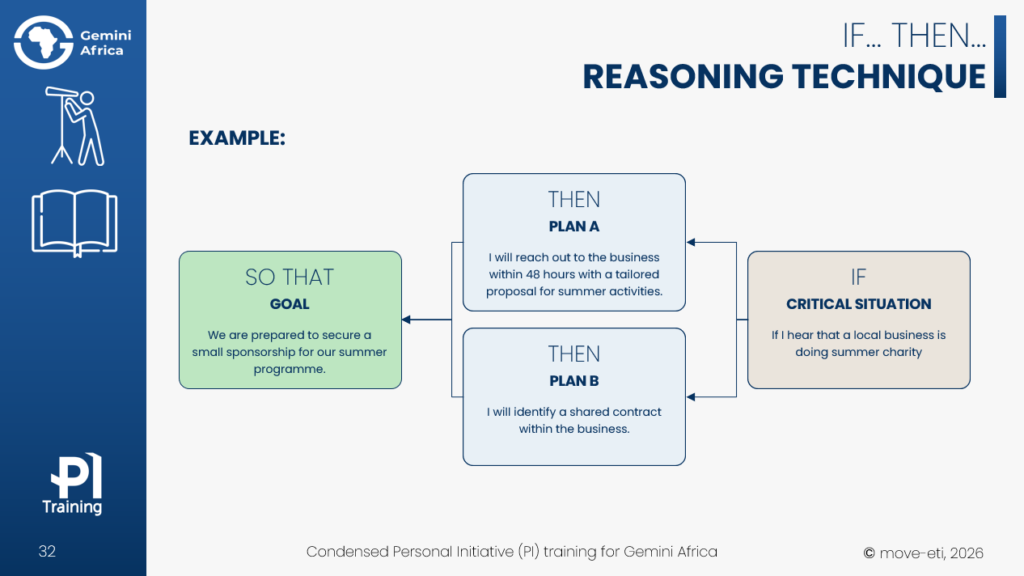
Fig. 1a: Example of contextual adaptation of the If-then-Reasoning Technique to the entrepreneurs in Upper Egypt.
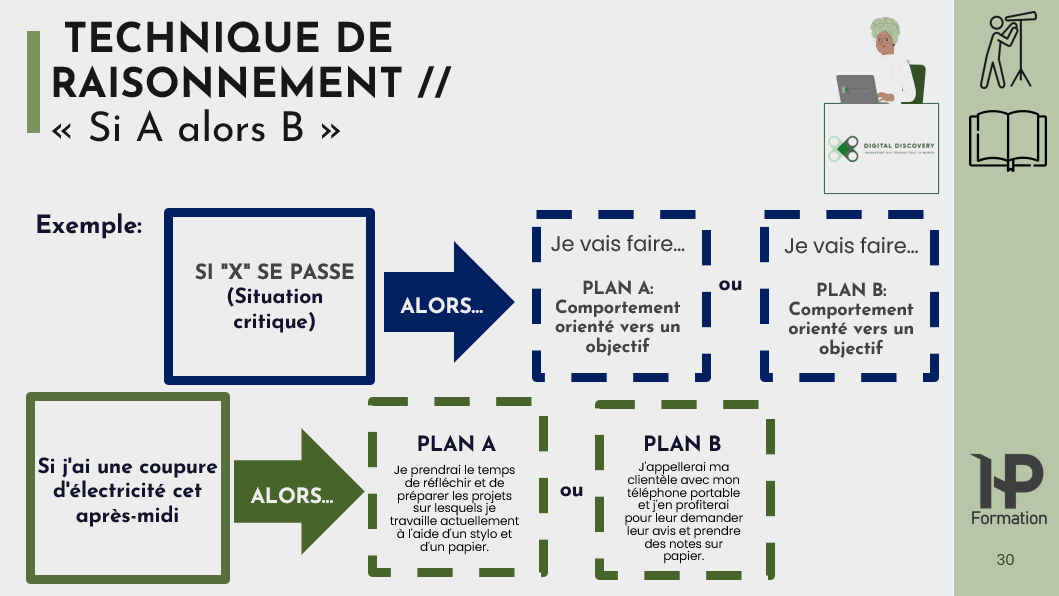
Fig.1b. Example of contextual adaptation of the If-then-Reasoning Technique to the context of entrepreneurs in Burundi.
The Importance of Working Closely With Local Partners
Local partners, trainers, and implementing organisations play a critical role in helping identify contextual realities that influence programme delivery and participant engagement. Their field experience often provides important insights into social dynamics, regional constraints, behavioural patterns, and implementation risks that may not appear in programme documents or baseline data only.
This collaborative process strengthens both programme relevance and implementation quality. It also helps ensure that interventions are not imposed uniformly across different environments, but instead developed through structured learning and local engagement.
For organisations implementing entrepreneurship and capacity-building initiatives across multiple regions, this approach can significantly improve both participant experience and long-term programme outcomes.
Why This Matters for Sustainable Impact
Entrepreneurship support programmes are increasingly expected to produce measurable and sustainable results, not simply deliver training sessions.
This requires moving beyond standardized delivery models toward interventions that combine:
- evidence-based methodologies,
- contextual understanding,
- practical implementation,
- and continuous learning.
Adaptation is therefore not a secondary adjustment to programme delivery. It is a core component of implementation quality.
As entrepreneurship ecosystems continue to evolve across different regions and communities, organisations that invest in contextualized, action-oriented, and collaborative delivery approaches will likely be better positioned to create meaningful and lasting impact.